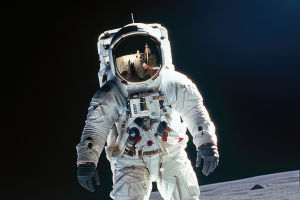
When we imagine life in space, we often picture astronauts floating freely and gazing at Earth from a small window.
However, daily life in orbit is much more than drifting—it revolves around careful scientific research. In space laboratories, astronauts carry out experiments that help us understand how nature behaves beyond Earth’s surface.
These studies cover biology, physics, chemistry, Earth observation, and engineering, offering insights impossible to achieve on the ground.
Life in Microgravity Laboratories
Inside a spacecraft, astronauts live and work in a microgravity environment, where objects float and behave differently than on Earth. This unique condition allows scientists to observe physical and biological processes without the constant pull of gravity.
Experiments are carefully organized in compact workstations. Tools and samples are secured, and changes are monitored step by step. Even simple tasks require planning because liquids, particles, and materials do not settle as they do on Earth.
Biology Studies in Orbit
Biological experiments in space focus on how living systems respond to microgravity. Scientists study cells, plants, and microorganisms to understand growth patterns and internal changes.
For example, researchers observe how cells divide and organize themselves, while plant studies reveal how roots and stems adapt without a clear “up” or “down.” These experiments uncover growth mechanisms that are hidden under normal Earth conditions and help us understand how life can adjust to new environments.
Physics Experiments in Microgravity
Physics research in space uncovers behaviors difficult to see on Earth. Without strong gravity, fluids form floating shapes, and movement becomes more uniform. Scientists study fluid flow, heat transfer, and combustion behavior in ways impossible on the ground. Flames in microgravity burn differently, providing insights into energy release and reaction processes. These experiments expand our understanding of matter under unique conditions.
Chemical and Material Research
Chemical reactions in space often follow different pathways than on Earth. Scientists observe how substances combine and transform, with crystal growth being a particularly interesting focus. In microgravity, crystals grow more uniformly, making their properties easier to study.
Material experiments examine alloys and composites, analyzing how they solidify, change shape, and respond to temperature shifts. These studies contribute to the development of stronger, more reliable materials for future space missions and technological applications on Earth.
Human Health and Adaptation
Living in orbit allows researchers to study how the human body adapts to long-term microgravity. Astronauts’ muscle strength, balance, and cardiovascular function are carefully monitored.
Exercise routines and structured daily schedules are essential for maintaining health and well-being during missions. Understanding how the body adjusts in space helps improve support systems for future long-duration missions, ensuring safety and comfort for astronauts.
Earth and Space Observation
From orbit, astronauts have a unique vantage point to observe both Earth and the cosmos. Instruments onboard allow the monitoring of weather systems, land formations, oceans, and atmospheric changes over time.
Telescopic equipment also enables the study of distant stars and galaxies, helping expand our understanding of the universe. These observations contribute valuable data for science and environmental monitoring.
Technology Testing for Future Missions
Space laboratories serve as testing grounds for new technologies. Navigation systems, life-support equipment, and communication tools are evaluated under real space conditions.
Testing in orbit ensures that spacecraft systems perform reliably in extreme environments. This process helps improve designs and efficiency for future space missions.
Experiments in space bring together biology, physics, chemistry, human research, and technology to expand our understanding of science and the universe. Every observation and discovery contributes to both life on Earth and future exploration beyond our planet. Life in orbit is not just floating—it is a complex, highly organized effort to uncover the secrets of microgravity and prepare humanity for the next frontier.